THE AGE — MARCH 2025 — ARTICLE REVIEW
Errors, Misrepresentations & Opinion-as-Fact
This page examines factual errors, mischaracterisations, and instances where opinion is presented as fact in the following articles by Sherryn Groch, published by The Age and the Sydney Morning Herald over March 8th and 9th, 2025:
- "The Liberal heavyweights and pandemic agitators driving the ‘Bike Boy’ campaign haunting Daniel Andrews" 🔗
- "Cyclist at centre of ‘Bike Boy’ campaign has no control over funds raised for his fight" 🔗
Where reporting involves living individuals and matters that remain unresolved, accuracy and context are essential. The issues below are reviewed claim by claim, with reference to the public record, to help readers distinguish verifiable fact from interpretation and assess the reliability of the reporting.
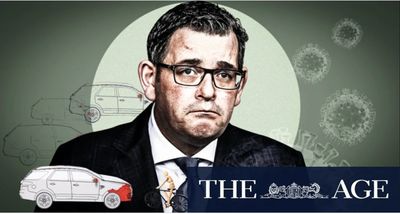
Section 1 — Framing the Campaign
1. URL framing: “pandemic agitators” and “haunting”
Claim: The URL frames the campaign as driven by “pandemic agitators” and personally “haunting” Daniel Andrews.
Record: The campaign’s stated purpose relates to a specific road-traffic incident and its investigation.
Discrepancy: The framing primes readers before any facts are presented.
2. Headline asserts political drivers as fact
Claim: “The Liberal heavyweights and pandemic agitators driving the ‘Bike Boy’ campaign…”
Record: The article does not establish that the campaign is driven or controlled by Liberals or activists.
Discrepancy: Motivation and leadership are asserted without evidence.
3. “COVID conspiracy theorists”
Claim: The campaign is associated with “COVID conspiracy theorists”.
Record: The campaign does not promote COVID conspiracy theories and is not organised around COVID-related activism.
Discrepancy: A label is applied without relevance to the campaign.
4. “Who’s really running the Bike Boy Scandal campaign…”
Claim: The article implies undisclosed or hidden control of the campaign.
Record: The campaign is publicly identified, with named organisers and transparent operations.
Discrepancy: Suspicion is encouraged without evidence.
5. “The mysterious ‘Bike Boy Scandal’ campaign”
Claim: The campaign is described as “mysterious”.
Record: Bike Boy has a public website, open fundraising, named organisers, and public legal actions.
Discrepancy: The description is unsupported by facts.
6. Use of “agitators” as a descriptor
Claim: Supporters are repeatedly described as “agitators”.
Record: This is a character judgement, not a factual description.
Discrepancy: Language substitutes for evidence.
7. Use of quotation marks to imply doubt
Claim: Inconsistent quotation marks are used around “official” when describing the campaign.
Record: The campaign operates openly and publicly.
Discrepancy: Scepticism is implied without explanation.
Section 2 — The Crash and the Evidence
8. “Favourite rumour on Spring Street”
Claim: The matter is described as a “favourite rumour”.
Record: The article does not examine the evidence underpinning the claims.
Discrepancy: Dismissal replaces analysis.
9. “Colossal cover-up” framed as exaggeration
Claim: Language describing a cover-up is framed as rhetorical.
Record: The article does not first explain what is alleged to have been covered up or why the claim is said to fail.
Discrepancy: Judgement precedes explanation.
10. “Supposedly got away with hitting a teenage cyclist”
Claim: The campaign alleges Andrews “got away with” hitting Ryan Meuleman.
Record: The campaign questions the investigation, evidence handling, and procedure — not guilt.
Discrepancy: A claim is attributed that has never been made.
11. “…in which the Andrews’ car collided with 15-year-old cyclist Ryan Meuleman”
Claim: The collision is described neutrally without detail.
Record: Police photographs show damage to the front of the Andrews’ vehicle.
Discrepancy: Physical evidence relevant to collision mechanics is omitted.
12. Front-end damage omitted
Claim: No mention is made of vehicle damage location.
Record: Front-end damage is consistent with the vehicle striking the cyclist.
Discrepancy: Omitting this alters reader understanding of how the crash occurred.
13. “While Catherine was driving”
Claim: Driver identity is presented as settled fact.
Record: Independent crash expert Dr Raymond Shuey concluded Daniel Andrews was a probable driver.
Discrepancy: Contrary expert evidence is not acknowledged.
14. Implied certainty about driver identity
Claim: Driver identity is treated as resolved.
Record: Driver identity remains disputed and supported by expert analysis.
Discrepancy: A contested issue is presented as settled.
15. Crash described as publicly dissected and resolved
Claim: The crash is framed as exhaustively examined.
Record: Ongoing legal proceedings indicate unresolved issues.
Discrepancy: Debate is treated as closure.
16. “Police closed the case without finding driver fault”
Claim: Police findings are presented as final.
Record: The article does not explain evidence collection, procedures followed, or investigative limitations.
Discrepancy: A conclusion is presented without context.
17. Anti-corruption review treated as definitive
Claim: An anti-corruption probe “cleared” police.
Record: The scope and reasoning of the review are not explained.
Discrepancy: Authority is cited without transparency.
18. Pressure on Ryan acknowledged but not examined
Claim: It is claimed Ryan was pressured to stay silent.
Record: The article does not explore the basis or evidence for this claim.
Discrepancy: Acknowledgement replaces examination.
19. “Conspiracy theory” characterisation
Claim: The case is described as having “all the makings of a great conspiracy theory”.
Record: The article does not explain where evidence fails.
Discrepancy: Opinion replaces analysis.
Section 3 — Campaign Activity and Participation
20. Trust arrangements framed as concerning
Claim: The family is “not in control” of funds.
Record: Trustee arrangements are common in legal matters.
Discrepancy: Standard practice is framed as unusual.
21. “Steering committee” implication
Claim: A “steering committee” is framed as concerning.
Record: No improper conduct is identified.
Discrepancy: Suspicion is implied without evidence.
22. Fundraiser described as “kept quiet”
Claim: An event with more than 100 attendees is described as “kept quiet”.
Record: The description is internally inconsistent.
Discrepancy: Framing is misleading.
23 Omission that Bike Boy received no funds
Claim: Fundraiser context implies campaign funding.
Record: Bike Boy did not receive funds from the event.
Discrepancy: Readers may draw incorrect conclusions.
24. Ryan “wasn’t there”
Claim: Ryan’s absence is highlighted.
Record: Medical and personal reasons are not explained.
Discrepancy: Omission invites speculation.
25. Father’s role framed as dominating
Claim: Ryan’s father is portrayed as speaking for him.
Record: Ryan retains agency; support reflects health realities.
Discrepancy: Context changes interpretation.
26. Campaign portrayed as escalating
Claim: Recent activity is framed as intensification.
Record: Legal timelines explain increased activity.
Discrepancy: Activity consistent with standard legal and campaign processes is framed as escalation.
27. Reader comments disabled
Claim: Reader comments were disabled online.
Record: Those referenced were unable to respond in the same forum.
Discrepancy: No contemporaneous public forum was available for response, including by those named in the article.
Closing Note
This review does not seek to advance a competing narrative. Its purpose is to identify where language, framing, or omissions materially affect reader understanding of an unresolved and ongoing matter involving living individuals. Where facts remain contested, journalism carries a responsibility to distinguish clearly between what is known, what is alleged, and what is opinion. Readers are entitled to that clarity when forming their own views.
🎥 Follow Our Socials and Watch More on YouTube
See every update, interview, and news feature on our official YouTube channel.
👉 Visit the Bike Boy YouTube Channel
Copyright © 2025 Bike Boy Scandal - All Rights Reserved.
This website uses cookies.
We use cookies to analyze website traffic and optimize your website experience. By accepting our use of cookies, your data will be aggregated with all other user data.